Dental Assistant Training vs Apprenticeship: Which Fits You?
Last Updated: October 25, 2026
Quick Summary
Dental assistant training builds classroom theory before clinical practice, while an apprenticeship puts you in a working dental office from day one under supervision. Apprenticeships are paid, often cost little or no tuition, and can run 12 weeks to a year, while formal programs take 9-12 months and charge tuition.
Formal programs run 9-12 months for a certificate and up to 2 years for an associate degree.
Apprenticeships last 12 weeks to 1 year depending on the sponsor's structured hours.
Apprentices earn a wage from day one that steps up as competencies are verified.
Ask each program how many supervised chairside hours you will complete and who signs off.
The Apprentice Academy offers 320 hours of chairside experience in its 12-week program.
Table of Contents
Dental Assistant Training vs Apprenticeship Programs: The Core Difference
How Formal Dental Assistant Training Works
How a Dental Assistant Apprenticeship Works
Dental Assistant Training vs Apprenticeship: Side-by-Side Comparison
How the Two Pathways Differ in Practice
Pros and Cons of Each Pathway
A Decision Framework for Different Learners
What a Dental Assistant Apprenticeship Actually Involves
Dental Assistant Program Cost: School Tuition vs Apprenticeship Pay
What Formal Training Actually Costs
What an Apprenticeship Actually Costs, and Pays
A Simple Return-on-Investment Calculation
Why the Math Matters for Your First Several Years
How Long Does It Take to Become a Dental Assistant?
Dental Assistant Certification Requirements and State Rules
Which Pathway Fits Your Situation?
Start Your Dental Assisting Career With a 12-Week Hands-On Program
Frequently Asked Questions
Dental Assistant Training vs Apprenticeship Programs: The Core Difference
Dental assistant training vs apprenticeship programs come down to one question: do you learn in a classroom first, or in a working dental office from day one? Formal training builds theory before practice. An apprenticeship reverses that order, putting you chairside immediately under supervision. At The Apprentice Academy, we built our 12-week program around the second model because it gets people hired faster and debt-free.
How Formal Dental Assistant Training Works
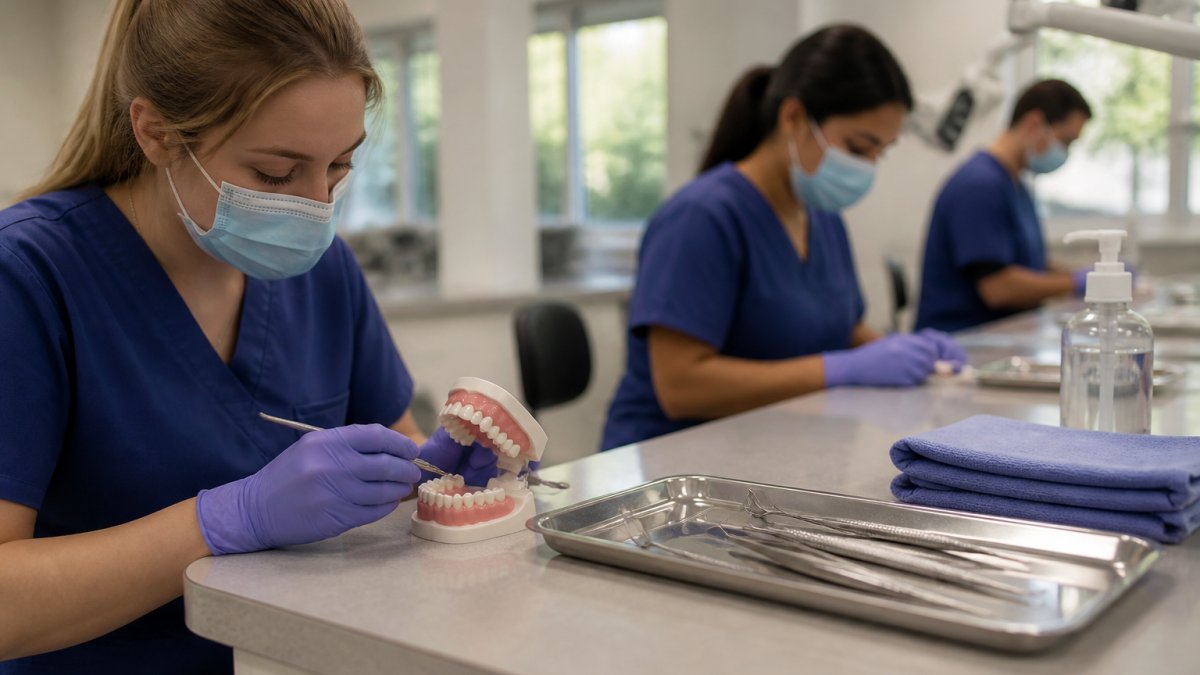
Formal training means a structured program, usually at a community college or trade school, that runs several months to a year. Students sit through classroom instruction on dental terminology, anatomy, and infection control before they touch a patient. Clinical practice and an externship come later, and students often have to find their own placement site. The upside is a broad curriculum.
How a Dental Assistant Apprenticeship Works
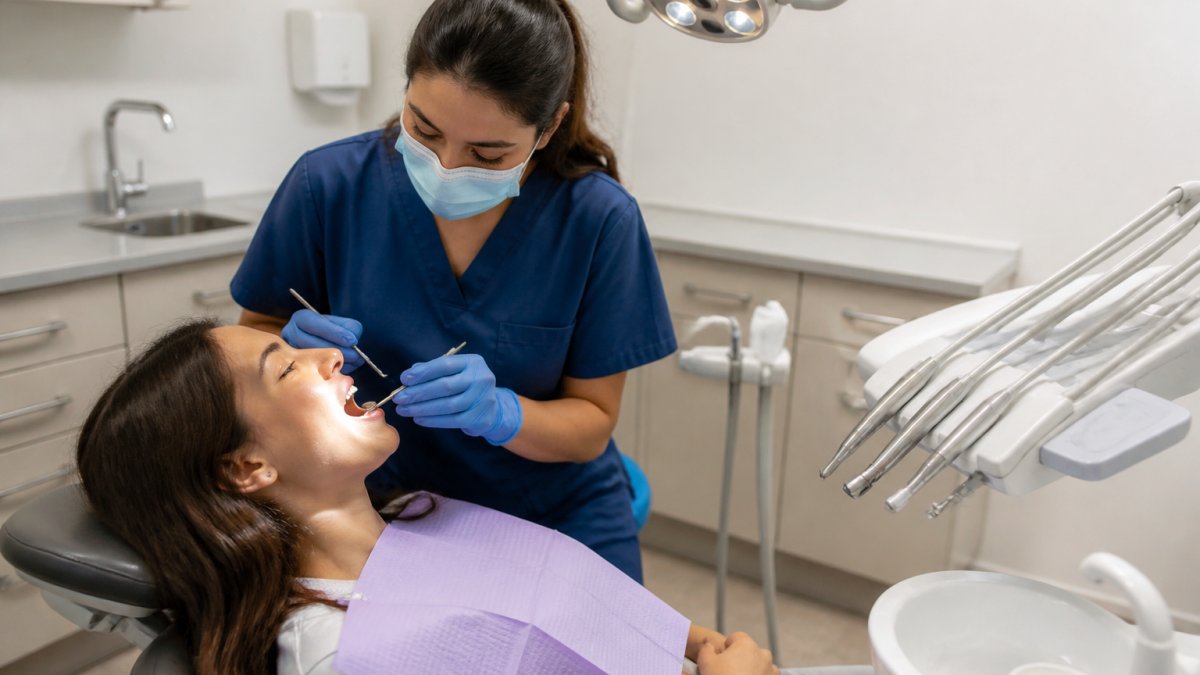
An apprenticeship is paid, on-the-job training inside a real dental practice. Apprentices learn chairside assisting, sterilization, radiography, and patient care while working alongside experienced assistants and dentists. Instead of a classroom, the dental office becomes the classroom. Mentorship is built in, and the skills you practice are the ones you'll use on the job. You can see how our apprenticeship program works if you want the full structure.
Dental Assistant Training vs Apprenticeship: Side-by-Side Comparison
The fastest way to choose is to compare the two pathways on the factors that actually affect your life: time, money, learning format, credential eligibility, and job readiness. The table below organizes the comparison around those decision criteria so you can see where each model wins and where it costs you.
Decision factor | Formal training (community college or trade school) | Apprenticeship (paid, on-the-job) |
Typical duration | 9-12 months for a certificate; up to 2 years for an associate degree | 12 weeks to 1 year, depending on the sponsor's structured hours |
Classroom instruction | Front-loaded: dental terminology, anatomy, infection control, radiography theory before patient contact | Concurrent: related instruction scheduled alongside chairside work, often weekly or in modules |
Hands-on clinical hours | Lab practice plus an externship, often 100-300 hours; placement may be self-sourced | Supervised chairside hours from week one; apprentices are working team members, not visitors |
Tuition and fees | Tuition, lab fees, books, scrubs, and exam fees; community college programs commonly run from a few thousand dollars to five figures at private schools | Often low or no tuition; many sponsors cover related instruction, and apprentices earn a wage during training |
Earnings while training | Generally none; some externships are unpaid | Paid from day one at a trainee rate that typically steps up as skills are verified |
Admission requirements | High school diploma or equivalent; some programs require placement tests, CPR certification, or immunizations | High school diploma or equivalent; employer interview, background check, and drug screen are common; sponsor-specific prerequisites vary |
Credential pathway | Program completion plus externship hours; prepares you to sit for the RDA or state-specific exam where required | Structured on-the-job hours plus related instruction; many sponsors build RDA exam prep into the schedule |
Supervision model | Instructor-led in a simulated lab, then a supervising assistant or dentist during externship | A named mentor, usually an experienced assistant or the dentist, signs off on competencies |
Job pipeline | Varies by school; career services may or may not have employer partners | Direct: the training site is a hiring practice, and completion often converts to a job offer |
Best for | People who want a campus setting, a broad theory base, and a recognized school credential | People who need income while learning, want to avoid debt, and learn best by doing |
How the Two Pathways Differ in Practice
The table hides one important mechanism: sequencing. In a formal program, you spend the first several months building vocabulary and theory before you touch a patient, then you practice in a lab, then you extern. In an apprenticeship, you are in a live office on day one, and the related instruction is timed to what you are already seeing chairside.
Pros and Cons of Each Pathway
Formal training pros: a broad curriculum that covers theory and specialties you may not see in a single office; a recognized school credential; a structured campus environment with peers and instructors; and access to financial aid at eligible institutions. Cons: higher tuition and fees, longer timelines, and externships that can be hard to arrange if the school does not have employer partners.
Key Takeaway A common mistake is assuming a shorter program means less skill. In practice, several hundred hours of supervised, hands-on training in a working office often builds job readiness faster than months of lectures, but only when the apprenticeship has a named mentor, structured competencies, and related instruction. Ask any program, school-based or not, how it verifies that you can actually perform each skill before you enroll.
A Decision Framework for Different Learners
Use the comparison above as a filter, not a scorecard. If you need income immediately and have no tolerance for debt, the apprenticeship column wins on cost and time-to-earning. If you want a broad theory base, a campus setting, and a school credential that travels, the formal training column wins on breadth. If you are unsure, ask each program three questions: How many supervised chairside hours will I complete?
What a Dental Assistant Apprenticeship Actually Involves
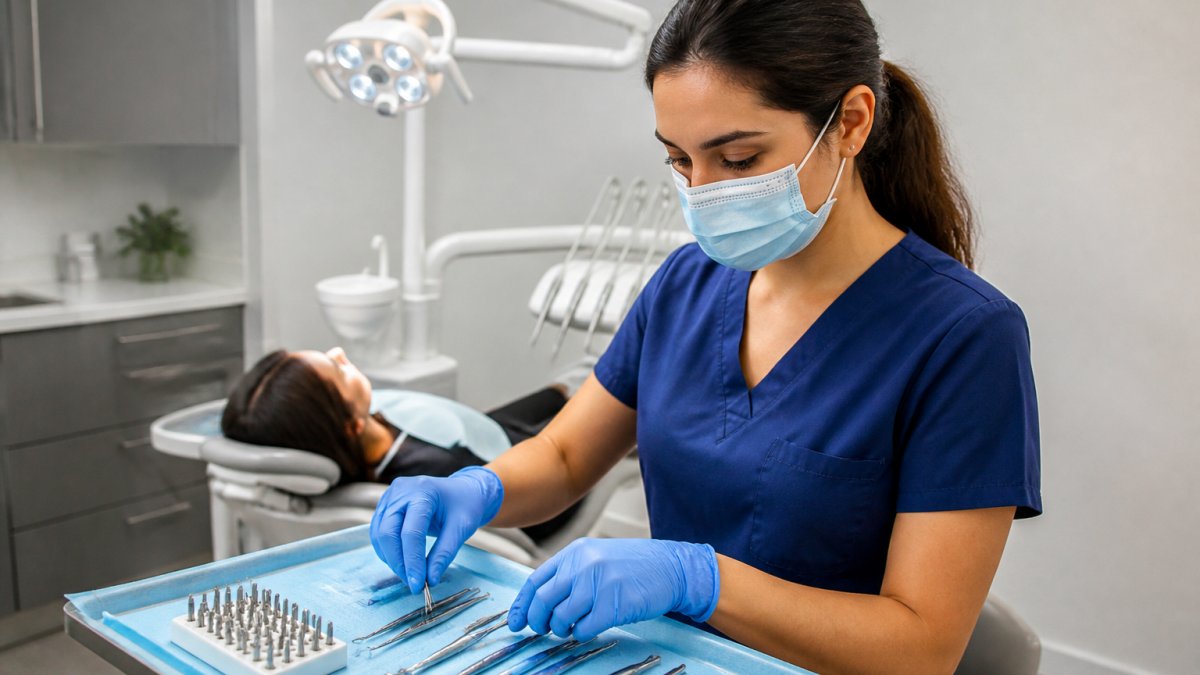
A dental assistant apprenticeship is a structured training arrangement where an apprentice works in a dental practice under a mentor while learning the full scope of chairside assisting. The day-to-day work covers dental instruments, sterilization, infection control, patient care, and dental procedures support. Apprentices also study dental terminology and prepare for radiography and certification exams. The key difference from a school externship is that the apprentice is a working member of the team, not a visitor.
Dental Assistant Program Cost: School Tuition vs Apprenticeship Pay
Cost is where the two pathways split hardest, and it is also where most guides stay vague. A transparent comparison needs three numbers: what you pay, what you earn while training, and how long it takes to reach a full wage. Below is a framework for building that comparison for any program you are considering, using example figures you can replace with real quotes.
What Formal Training Actually Costs
College-based dental assistant programs charge tuition plus fees that are easy to overlook: lab fees, instrument kits, scrubs, textbooks, CPR certification, immunization and background-check costs, and the exam fee for the RDA or state-specific credential. Community college certificate programs commonly land in the low-to-mid thousands of dollars for in-district students, while private trade schools can run into five figures. Add the opportunity cost of not earning during 9-12 months of school, and the true cost is tuition plus forgone wages.
What an Apprenticeship Actually Costs, and Pays
A registered apprenticeship flips the equation. Many sponsors charge little or no tuition, related instruction is often covered, and the apprentice earns a wage from day one. That wage typically starts at a trainee rate and steps up as competencies are verified, so the apprentice's effective cost is close to zero and their net position improves each pay period.
A Simple Return-on-Investment Calculation
You do not need a finance degree to compare pathways. Use this three-step method with real quotes from the programs you are considering:
Total cost of training. Add tuition, fees, books, scrubs, exam fees, and any unpaid externship hours valued at the wage you could otherwise earn.
Earnings during training. Multiply the apprentice wage by the number of training hours, or enter zero for an unpaid school program.
Time to full wage. Estimate how many months until you reach a full dental assistant wage in your area, then compare the cumulative net position of each pathway at that point.
Pro Tip Run the calculation at 12 months and at 24 months. School-based programs often look better on paper at the start because of financial aid, but the apprenticeship's head start on earnings frequently closes the gap within the first year, and the apprentice has no tuition debt to repay.
Why the Math Matters for Your First Several Years
A dental assistant's entry-level wage is modest, so starting your career with debt changes your first several years in ways a brochure will not show you. A graduate who borrowed to pay tuition starts at the same wage as an apprentice who earned while learning, but the graduate is servicing a loan. Our program is designed to cost a fraction of traditional college, and you can review our plans and pricing to see the numbers side by side.
Watch Out Ask every program, school or apprenticeship, for the total cost in writing, including exam fees and any required supplies. A low tuition quote that excludes a $200 instrument kit, a $150 exam fee, and unpaid externship hours is not the real cost.
How Long Does It Take to Become a Dental Assistant?
Most dental assistant programs take 9 to 12 months, while apprenticeships can run anywhere from 12 weeks to a full year depending on the structure. A college program usually spends months on classroom instruction before clinical practice begins. A compressed apprenticeship front-loads the hands-on work, so you reach job readiness sooner. The trade-off is intensity: a 12-week program moves fast, and you'll be learning in a live office rather than a simulated lab.
Dental Assistant Certification Requirements and State Rules
Certification rules for dental assistants vary by state, and that's the detail most guides gloss over. Nearly every state requires or strongly prefers the Registered Dental Assistant (RDA) credential or a state-specific equivalent, and requirements often include a training program, an exam, and sometimes a radiology component. Because scope of practice differs from state to state, check your state dental board's official rules before enrolling anywhere. For the step-by-step process, see how to apply for dental assistant certification.
Which Pathway Fits Your Situation?
The right pathway depends on your starting point, not on which model sounds better on paper.
Career changer with a full-time job: a flexible apprenticeship that works around your schedule beats a fixed campus timetable.
High school graduate with no debt tolerance: a low-cost apprenticeship avoids loans entirely.
Someone who thrives in a classroom: a formal program's structured curriculum may suit you.

Working adults with family responsibilities often find that flexible dental assistant training is the deciding factor.
Start Your Dental Assisting Career With a 12-Week Hands-On Program
If the apprenticeship model fits how you learn, The Apprentice Academy runs a 12-week, hands-on dental assistant program built around real dental offices. You train with 1-on-1 mentorship from practicing experts, complete 320 hours of chairside experience, and get preparation for the RDA exam, all with books, materials, and scrubs included. You can join our fast, affordable dental assistant program and start your career without the debt.
Frequently Asked Questions
What is the difference between dental assistant training and an apprenticeship?
Formal dental assistant training happens in a school setting, with classroom instruction, a set curriculum, and a clinical externship near the end. An apprenticeship flips that order: you are hired into a dental practice and learn chairside assisting, infection control, and instrument handling on the job under a mentor, often with related coursework alongside. Training programs usually charge tuition, while registered apprenticeships pay a wage during training. Both routes can prepare you for the Registered Dental Assistant (RDA) exam, but the timeline, cost, and level of supervision differ significantly.
Can you become a dental assistant through an apprenticeship?
Yes. Registered dental assistant apprenticeships exist in several states, and they combine paid workplace training with mentorship and exam preparation. The catch is availability: apprenticeship slots depend on which practices and sponsors operate near you, and many are tied to specific employers. If no sponsor is hiring in your area, a formal training program with a built-in externship is often the more reliable path.
How long does it take to become a dental assistant?
It depends on the route. Accelerated hands-on programs can finish in around 12 weeks, while traditional college dental assisting programs typically run about 9 months. Registered apprenticeships generally take 12 months or longer, since learning is spread across paid work hours. Your state's certification requirements also affect timing: if your state requires an RDA credential or radiography certification, you need to schedule exam dates after completing your training hours. Ask any program how many hands-on clinical hours you will log before graduation.
Which costs more: dental assistant school or an apprenticeship?
Apprenticeships usually cost less in tuition, and some are free, but they pay lower wages while you learn and take longer to complete. College dental assisting programs commonly charge tuition in the thousands, and you may also pay for books, scrubs, and exam fees. Compare total cost against earnings during training, not tuition alone. A shorter, lower-cost program that gets you into a paid entry-level position sooner can beat a free apprenticeship that takes a year. Ask each program for the full cost including materials and exam fees.
Do dental assistants need formal training or certification?
Requirements vary by state. Some states allow dental assistants to start with on-the-job training only, while others require registration or certification for tasks like taking radiographs. Most employers prefer candidates who completed a formal program or apprenticeship because it signals supervised clinical practice and familiarity with infection control and dental terminology. Check your state dental board's rules before enrolling anywhere, and confirm the program prepares you for the specific credential your state issues.
The hardest part isn't learning the skills. It's choosing a path that won't bury you in tuition or stretch your timeline for years. The Apprentice Academy was built to remove that trade-off: a 12-week program, hands-on training in real offices, direct hiring connections, and a job-offer guarantee. Get started with The Apprentice Academy and launch your dental assisting career without student debt.
Apply Now
Add theapprenticeacademy.org as a preferred source on Google →
Comments