How to Start Dental Assisting With No Experience
Table of Contents
Step 1: Understand What Dental Assistants Actually Do
Clinical vs. Administrative Duties
Step 2: Check Your State's Credential Requirements
A State-by-State Checklist
Three Common State Patterns
What to Do If You Might Move
Step 3: Choose the Right Dental Assistant Training Programs
How to Verify a Program Is Legitimate
Weighing Cost Against Return
Step 4: Build Skills Through On-the-Job Training and Externships
Step 5: Find Dental Assistant Jobs With No Experience
Employers Willing to Train
Step 6: Write a Dental Assistant Resume With No Experience
Step 7: Prepare for Dental Assistant Interview Questions
Your First 30 Days: A Realistic Action Plan
Frequently Asked Questions
Last Updated: October 21, 2026
Step 1: Understand What Dental Assistants Actually Do
Dental assisting is the hands-on work of supporting a dentist during patient care, and it is one of the fastest ways into a healthcare career without a degree. You are the second pair of hands in the room.
A dental assistant does two kinds of work, and entry-level jobs blend them.
Clinical vs. Administrative Duties
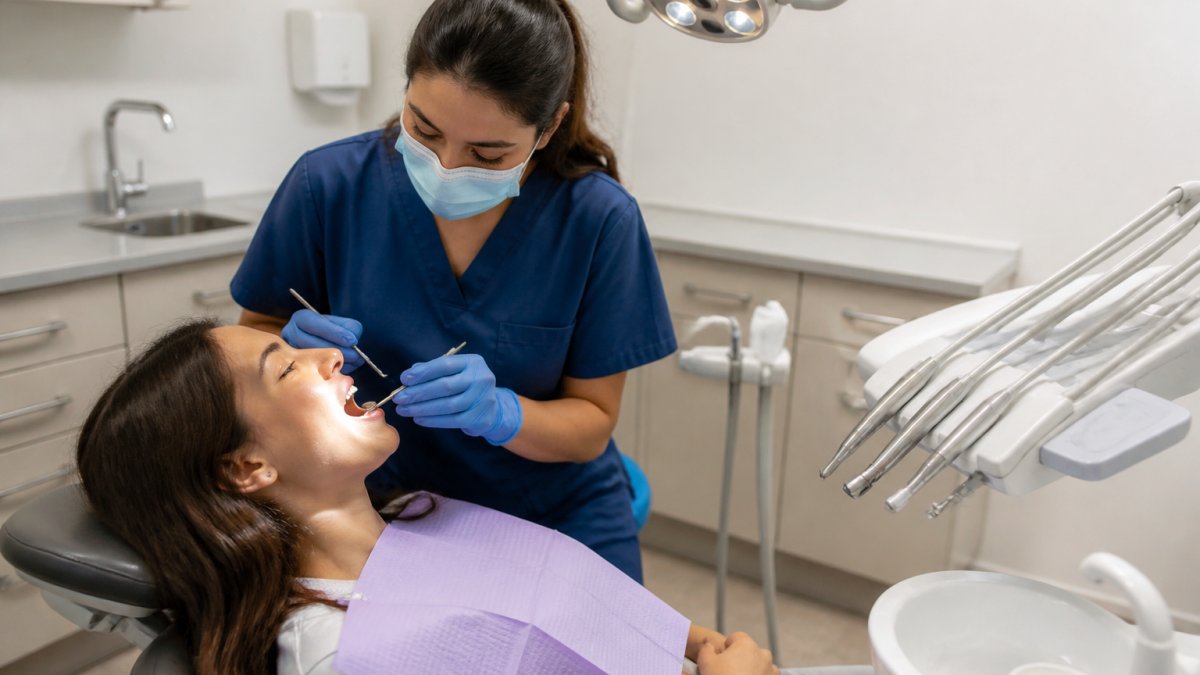
Clinical duties put you beside the patient: preparing the room, setting out instruments, suctioning during procedures, and handling infection control and sterilization between visits.
Administrative duties keep the office running: greeting patients, scheduling appointments, updating records, and explaining aftercare.
Don't assume the job is mostly paperwork, most days you are chairside for a good share of it.
Pro Tip Ask any office you visit which duty split they use. Some practices keep assistants almost fully chairside, while others rotate front-desk tasks. Knowing this before you apply tells you whether the job fits how you like to work.
Step 2: Check Your State's Credential Requirements
Credential rules for dental assistants are set at the state level. Some states have no formal credential for basic chairside duties; others require registration or a specific exam before hire. A few recognize a national credential such as the Certified Dental Assistant (CDA) offered through the Dental Assisting National Board (DANB), while others run their own state exam.
Because the rules are local, the state dental board is the only authority that matters.
A State-by-State Checklist
Open your state dental board's website and answer these questions in writing:
Is registration required to work at all? Some states issue a dental assistant registration or permit before you can be hired; others let you start with no credential and add one later.
Which duties are allowed without a credential? Basic chairside tasks such as suctioning, passing instruments, and sterilization are commonly allowed under direct supervision, but the definition of "direct supervision" varies.
Which exams or courses does the board accept? Look for the specific exam name, the approved course list, and whether the board accepts a national certification like the CDA or only its own state exam.
Three Common State Patterns
Most states fall into one of three patterns, and knowing which one you are in shapes your plan:
No credential for entry-level chairside work. You can be hired and trained on the job, and you add a radiology permit or expanded-function credential later if you want to do more.
Registration or permit before hire. You complete a board-approved course or exam, register, and then apply for jobs with that credential in hand.
State exam or national certification required. The board names a specific exam, and you must pass it before performing certain duties.
Call the board if the website is unclear. Ask two direct questions: "What do I need to be hired as a dental assistant in this state?" and "Which exams do you accept for radiography and expanded functions?"
Watch Out Skipping the state check is the most expensive mistake beginners make. A program that satisfies one state's board may not qualify you in another, and you can end up paying twice. Confirm the program appears on your board's approved list before you enroll, not after.
What to Do If You Might Move
If you may relocate within a few years, favor training that leads to a national credential such as the CDA, because it travels better than a single state's course. Confirm the new state accepts it and check for any state-specific module.
Key Takeaway Treat your state dental board as the source of truth and the training program as the vendor. The board decides what counts; the program only sells you a path to it. Verify the path before you pay.
Step 3: Choose the Right Dental Assistant Training Programs
Dental assistant training programs range from short vocational courses to longer college certificates. Compare programs on four points: length, total cost, hands-on hours in a real dental office, and whether the state board recognizes the credential you finish with.
Here is how the main options stack up.
Program Type | Typical Length | Typical Cost Range | Main Strength | Watch Out For |
Vocational or apprenticeship program | Weeks, not months | Low-to-mid four figures | Hands-on training in real offices | Confirm state board approval |
Community college certificate | Several months to a year | Mid four figures, plus books and fees | Structured classroom plus lab | Higher cost, longer time out of the workforce |
Online program | Varies widely | Low four figures | Flexible scheduling | Little or no chairside practice |
Employer on-the-job training | Ongoing | Often paid while you learn | Earn while you train | Depends on the office's patience and turnover |
Costs vary by region and provider, so ask each school for a written total that includes tuition, lab fees, books, exam fees, and any uniform or instrument kit. Compare that total against the entry-level pay in your area, which you can check through the Occupational Outlook Handbook entry for dental assistants.
How to Verify a Program Is Legitimate
Call your state dental board and ask whether the program is recognized. Then ask the school these questions:
Is the program on your state board's approved list? Ask for the approval number or the board's listing.
Where do students train, and how many hands-on hours do they get? You want actual dental offices named, not a general promise.
Can I speak to a recent graduate who is now working? A legitimate program answers without hesitation.
Ask for the externship list, then call one or two of those offices and ask whether they hire from the program, that tells you more than any brochure.
Watch Out Be cautious with any program that guarantees a job without naming the employers, pressures you to enroll on the first call, or cannot tell you which state exam its graduates sit for. A recognized program is comfortable with a day or two of your due diligence.
Weighing Cost Against Return
A simple way to compare programs is cost per hands-on hour: divide total program cost by supervised chairside hours in a real office. More clinical hours at a similar price means more practice for the same money.
Also count the wages you give up while training. A paid apprenticeship lets you earn while you learn; a full-time college certificate costs more in tuition and lost income, so it makes sense mainly if you plan to pursue expanded functions or further study.
Key Takeaway A program is only as good as its placement network. Hands-on hours in a working dental office teach you more than any lecture, and those same offices are often where graduates get hired. Verify the board approval, the clinical hours, and the placement record before you pay.
Step 4: Build Skills Through On-the-Job Training and Externships
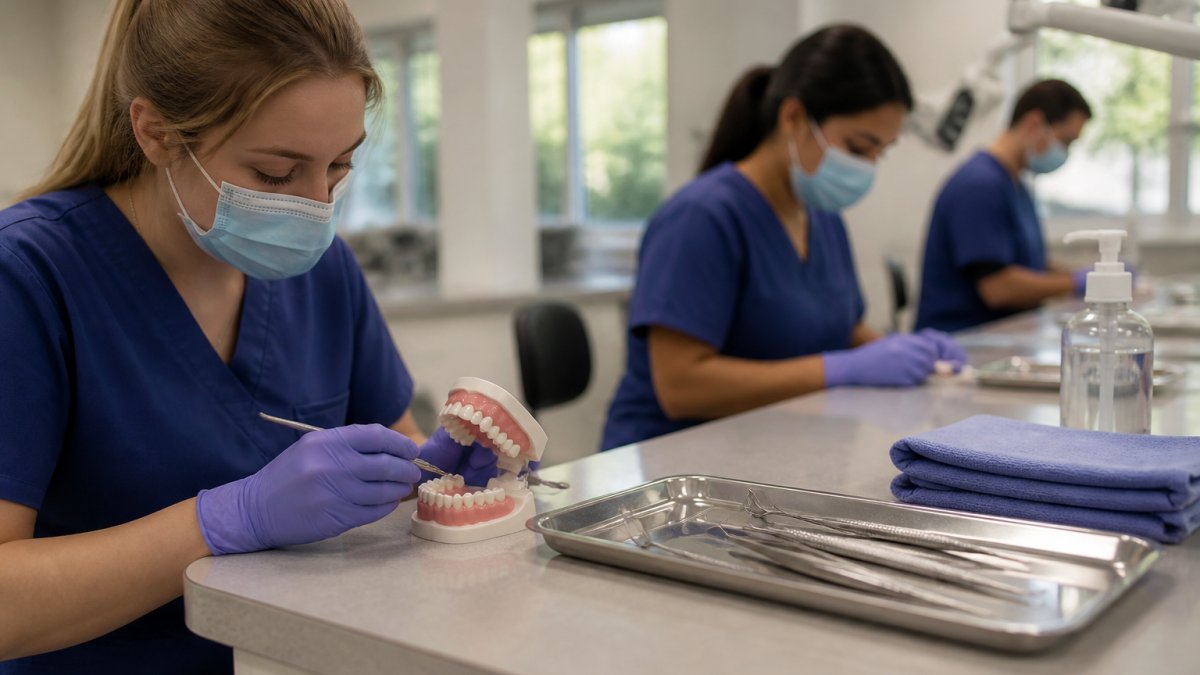
On-the-job training is where dental assisting clicks: you learn instrument names by handing them over and patient communication by talking to patients. Externships give you that practice in a supervised setting before paid work.

Focus your practice on the skills employers screen for:
Chairside assisting and passing instruments
Infection control and sterilization routines
Patient care and comfort
Our program at The Apprentice Academy builds these through 320 hours of hands-on training in real dental offices, with a mentor beside you.
Step 5: Find Dental Assistant Jobs With No Experience
Dental assistant jobs with no experience do exist, and the fastest route is to target offices that already train. Look for postings that say "will train" or "entry-level welcome."
Search beyond job boards. Call dental offices directly and ask whether they hire assistants without experience. Many openings never get posted.
Employers Willing to Train
The best leads come from offices that run their own onboarding. Ask these questions on the phone:
Do you hire assistants with no experience?
What does your training look like in the first month?
Do you help new hires prepare for the RDA exam?
Track every call with a simple list of office name, contact, and response.
Pro Tip Ask whether the office has hired a new graduate in the last year. If they have, they know how to train from zero and are far more likely to take a chance on you.
Step 6: Write a Dental Assistant Resume With No Experience
A dental assistant resume with no experience works when it leads with skills, not job history. Employers know you are new; they want reliability, comfort with people, and real interest in dentistry.
Build your resume in this order:
A short summary naming your training and your goal
A skills section with chairside, sterilization, and patient communication
Any customer service or care work you have done
Use the job posting's own words where they fit. If it says "patient care," write "patient care," not "customer support."
Step 7: Prepare for Dental Assistant Interview Questions
Dental assistant interview questions test how you handle patients and pressure more than what you have memorized.
Answer with a short story: the situation, what you did, and how it turned out, under a minute.
Prepare two questions of your own about the office's training and a typical day. Interviewers notice candidates who ask about the work itself.
For a fuller picture of the role and its duties, the Occupational Outlook Handbook entry for dental assistants is a useful reference on day-to-day tasks and job conditions.
Your First 30 Days: A Realistic Action Plan
A realistic first-30-days plan turns a vague goal into daily steps:
Days 1-7: Get the facts. Check your state dental board's requirements. Write down which credential you need and which duties you can do without one.
Days 8-14: Pick a training path. Compare two or three programs on length, cost, and hands-on hours.
Days 15-21: Start building skills. Enroll, or begin calling offices about entry-level roles.
Days 22-30: Apply and follow up. Send applications to offices that say "will train." Follow up by phone a week later.
Watch Out Applying to a hundred postings and waiting is the slow path. A handful of targeted applications with a phone follow-up beats a mass blast every time.
The CDC guidance on infection control in dental settings is worth reading early, since sterilization and safety come up in almost every interview and on the job.
Career progression is real in this field. The American Dental Association's resources on the dental team outline how those roles fit together.
You do not need experience to start.
Starting a dental assisting career without experience feels risky until you see how many offices train from scratch. At The Apprentice Academy, we remove the guesswork: a 12-week program, 320 hours of hands-on training in real dental offices, mentorship from practicing experts, and preparation for the RDA exam.
Frequently Asked Questions
Can you become a dental assistant with no experience?
Yes. Most dental assistant jobs are entry-level, and many offices hire candidates with no prior dental experience. The key is completing a hands-on training program or finding an employer willing to train on the job. Formal dental assisting programs typically take 9 to 12 months, while accelerated vocational programs can finish in about 12 weeks. After training, you can sit for the Registered Dental Assistant (RDA) exam, which many states require or prefer.
Do you need a degree to become a dental assistant?
No degree is required. Dental assisting is a vocational role, not a degree-based profession. You can enter through a certificate program, a diploma, or on-the-job training, depending on your state's rules. Some states require graduation from a CODA-accredited program before you can take the RDA exam, while others allow chairside training with a licensed dentist. Check your state dental board's requirements before enrolling in any dental assistant training program.
How do I get my first dental assistant job with no experience?
Start by completing a hands-on training program that includes an externship, since real clinical hours make you far more employable. Then target dental assistant jobs with no experience explicitly listed, often at private practices and community clinics. Build a resume that highlights transferable skills like customer service, attention to detail, and infection control awareness. Follow up on every application within a week, and prepare for common dental assistant interview questions about sterilization, patient care, and teamwork.
How long does it take to become a dental assistant?
Timelines vary by path. Traditional college programs run about 9 months, while accelerated vocational programs can take as little as 12 weeks. On-the-job training depends on the employer, often 3 to 6 months before you're fully independent. After training, add time to schedule and pass your state's RDA exam. The fastest realistic route for someone with no experience is a short, hands-on program paired with an externship that leads directly to a hiring conversation.
Apply Now
Comments