Fast Track Healthcare Careers in Denver: 2026 Guide
Table of Contents
Fast Track Healthcare Careers in Denver: Where to Start
Entry-Level Healthcare Jobs Without a Degree
Clinical Roles
Non-Clinical and Support Roles
How to Choose in One Sitting
Dental Assistant Training Duration and What It Costs
12-Week Apprenticeship vs 9-Month College Program
Medical Career Transition Tips for Denver Career Changers
Colorado Licensing and Certification: What You Actually Need
Dental Assistant
Certified Nursing Assistant (CNA)
Medical Assistant
Phlebotomist
Behavioral Health Technician and Caregiver Roles
How to Verify a Program Before You Enroll
Step-by-Step Plan to Enter Healthcare in Denver
Steps 1-3: Pick a Role, Choose Training, Enroll
Steps 4-6: Train, Extern, Apply
Frequently Asked Questions
Last Updated: October 9, 2026
Fast Track Healthcare Careers in Denver: Where to Start
Fast track healthcare careers in Denver get you into a patient-facing job in months, not years. At The Apprentice Academy, we run a 12-week dental assistant apprenticeship built on hands-on hours in real dental offices.
Colorado's dental and medical practices hire constantly, and they hire for skills, not diplomas. This guide covers which roles you can enter fastest, what each requires, and how to plan around your current schedule.
Entry-Level Healthcare Jobs Without a Degree
Entry-level healthcare jobs without a degree fall into two groups: clinical roles that work directly with patients, and non-clinical roles that keep the practice running.
The table below compares realistic entry points. Training windows are typical ranges, not guarantees, and pay varies by practice, shift, and experience.
Role | Typical Training Window | Credential Needed | Typical Starting Pay | Patient Contact |
Dental assistant | 12 weeks (apprenticeship) to ~9 months (college) | Registered Dental Assistant (RDA) for expanded functions and X-rays | Roughly $20-$26/hour in the metro area | High, chairside |
Certified Nursing Assistant (CNA) | 4-12 weeks, state-approved program | State CNA certification and competency exam | Roughly $18-$23/hour | High, hands-on |
Medical assistant | ~9-12 months certificate, some 2-year degrees | Often CMA or RMA certification, varies by employer | Roughly $19-$24/hour | High, front and back office |
Phlebotomist | Weeks to a few months | Often CPT or employer-based training | Roughly $18-$22/hour | Moderate, procedure-focused |
Behavioral health technician | Often on-the-job, some short certificates | Varies; some employers require CPR and background check | Roughly $18-$23/hour | High, mental health support |
Caregiver / patient support aide | Days to weeks | Often none; some employers require a background check | Roughly $16-$20/hour | High, daily living support |
Front desk / patient coordinator | On-the-job | None typically | Roughly $17-$21/hour | Low, administrative |
Medical billing and coding specialist | Months to a year | Often CPC or CBCS certification | Roughly $19-$25/hour | None, back office |
Pay ranges reflect common metro-area postings and shift with experience, specialty, and PRN or full-time status.
Clinical Roles
Dental assistant is the fastest clinical entry point in most practices.
Certified Nursing Assistant (CNA) is the other fast clinical door.
Phlebotomist training is short, often weeks, and the skill is portable across hospitals, labs, and clinics.
Behavioral health technician roles are growing and often train on the job.
Caregiver and patient support aide is the lowest barrier to entry, often with no credential required.
Non-Clinical and Support Roles
Not everyone wants to be chairside. Practices also hire front desk coordinators, schedulers, insurance and billing specialists, and medical records clerks. These roles lean on office management and electronic health records skills rather than clinical technique.
The trade-off is real: non-clinical roles are easier to enter but pay less and cap out sooner, while clinical roles cost more upfront but open a career path, including a later step up to dental hygienist or RN.
Pro Tip If you're unsure which side fits you, ask one question: do you want to be in the room with the patient? If yes, go clinical. If you'd rather manage the flow, start non-clinical and cross-train later.
How to Choose in One Sitting
Rank the roles above on three things: how fast you need income, how much you can pay for training, and how much patient contact you want. The role that scores well on all three is your starting point, the fastest path in is rarely the final destination.
Dental Assistant Training Duration and What It Costs
Dental assistant training duration is the biggest variable in how fast you start earning. A 12-week apprenticeship gets you working in about three months; a traditional college program takes roughly nine months.

12-Week Apprenticeship vs 9-Month College Program
The two paths differ in more than length.
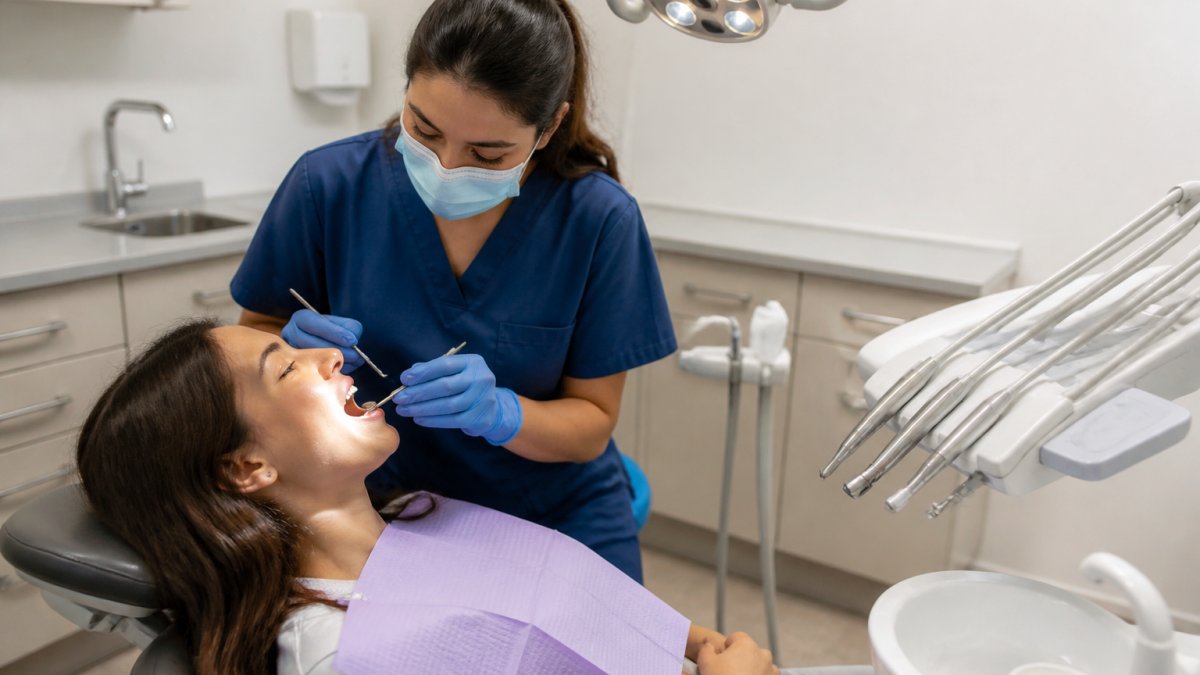
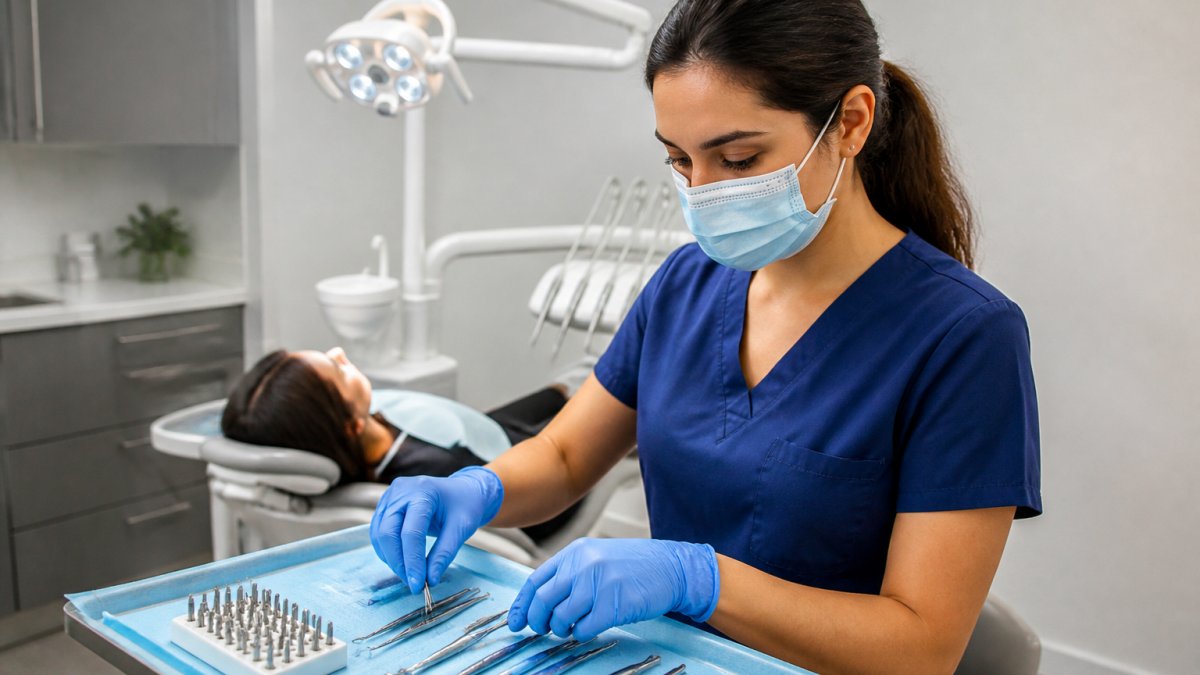
Apprenticeship: you train inside working dental offices alongside practicing assistants and dentists, accumulating roughly 320 hours of hands-on experience. The program places you, so you never hunt for your own externship site.
College program: you spend the first stretch in a classroom on theory, then look for an externship placement, while paying college tuition.
Cost is where the gap gets uncomfortable. Our apprenticeship costs a fraction of traditional college programs and includes books, materials, and scrubs.
The honest limitation: a 12-week program is intense, with none of the slow ramp of a nine-month course. If you're juggling a full-time job, confirm the schedule before you enroll.
Watch Out The most common mistake career changers make is enrolling in the first program they find without checking whether externship placement is included. If you have to source your own site, you can lose months waiting for a practice to take you.
Medical Career Transition Tips for Denver Career Changers
Medical career transition tips matter most for people already working full-time. Most fast-track healthcare programs are built for exactly this situation, yet many people quit their job first and then scramble. Don't.
A few things we've learned from students who made the switch smoothly:
Keep your current income while you train. Flexible scheduling exists for a reason.
Pick a role with a clear hiring pipeline. A credential is worthless if no local practice is hiring for it.
Ask about job placement support before you pay. Programs that guarantee interviews beat programs that hand you a certificate and wave goodbye.
Budget for the transition, not just the tuition. There's a gap between finishing training and your first full paycheck.
For Denver career changers, dental assisting is a strong fit: practices hire continuously and the training window fits around an existing job.
Key Takeaway The fastest transition isn't the shortest program. It's the program that gets you hired. Placement support and employer relationships matter more than shaving two weeks off the schedule.
Colorado Licensing and Certification: What You Actually Need
Credential requirements depend on the role, and getting this wrong is one of the most expensive mistakes a career changer can make. Enroll in the wrong program and you can finish training without the credential employers require.
Here is the practical checklist by role. Confirm current rules with the Colorado Dental Board and the relevant state board before you pay any tuition, because requirements change.
Dental Assistant
The credential employers look for is the Registered Dental Assistant (RDA) designation. To earn it, you generally need to:
Complete a training program that meets state requirements.
Pass the required exam, which includes a written portion and, for expanded functions, additional certifications.
Submit your application and fees to the state board.
Keep your registration current with renewal requirements.
Some practices hire you without the RDA for basic chairside tasks, but to take X-rays or perform expanded functions, the RDA is not optional. Ask any program two questions: does this training satisfy the state's RDA requirements, and does it prepare me specifically for the exam?
Certified Nursing Assistant (CNA)
CNA certification is state-administered: complete a state-approved training program, pass a competency exam with written and skills portions, and appear on the state nurse aide registry. Most employers verify your registry status before hiring. Renewal is typically required, and lapses can cost you the job.
Medical Assistant
Medical assisting is not state-licensed like nursing or dental assisting. Employers look for national certifications such as CMA (AAMA), RMA (AMT), or CCMA (NHA), and preferences vary, so check postings in your target specialty before choosing a program. A certificate from a program that doesn't prepare you for one of these exams is worth less than it looks.
Phlebotomist
Phlebotomy certification is often employer-driven rather than state-mandated. Common credentials include CPT (ASCP) and similar national certifications, and some employers train you on the job and help you sit the exam. If you're paying out of pocket, confirm local employers actually require it first.
Behavioral Health Technician and Caregiver Roles
These roles typically have no state license. Employers may require CPR and first aid certification, a background check, and sometimes a driver's license and clean driving record. The barrier is low, which is why they're the fastest to enter, and why they tend to pay the least at the start.
How to Verify a Program Before You Enroll
Use this checklist before you sign anything:
Confirm the credential. Ask which specific credential the program prepares you for, and verify it with the state board or certifying body.
Confirm exam prep. A program that teaches skills but skips exam preparation is adding a step, not saving you time.
Confirm externship placement. If you source your own site, you can lose months waiting for a practice to take you.
Confirm the total cost. Tuition, books, materials, scrubs, exam fees, and application fees add up. Ask for the full number in writing.
Watch Out The most common mistake career changers make is enrolling in the first program they find without checking whether the credential it produces is the one local employers actually require. Verify the credential first, then the program.
Step-by-Step Plan to Enter Healthcare in Denver
Here is the practical path, in order. Most people can move through it in a few months if they stay focused.
Steps 1-3: Pick a Role, Choose Training, Enroll
Decide clinical or non-clinical. Use the question from earlier: do you want to be in the room with the patient?
Compare training formats. Apprenticeship, certificate, or associate degree. Match the format to your schedule and budget.
Confirm placement and exam prep. Ask directly: do you find my externship site, and do you prepare me for the credential exam?
Steps 4-6: Train, Extern, Apply
Complete the hands-on hours. This is where you find out if the work suits you, most people know within two weeks.
Finish your externship inside a working practice. Treat it as a long interview; practices hire the externs they already trust.
Apply with a real plan. Use job alerts, apply to practices you externed with, and lean on your program's employer connections.
Step | What You Do | Typical Time |
1 | Pick clinical or non-clinical role | 1-2 weeks |
2 | Compare training formats | 1-2 weeks |
3 | Confirm placement and exam prep | 1 week |
4 | Complete hands-on training | 8-12 weeks |
5 | Finish externship in a practice | 2-4 weeks |
6 | Apply and accept an offer | 2-6 weeks |
For broader context on healthcare workforce demand, the U.S. Bureau of Labor Statistics Occupational Outlook Handbook tracks employment projections by role and region. It's a useful gut-check before you commit to a specialty.
Best For Career changers who need to keep working while they train, and who want a placement pipeline instead of a solo job hunt.
Fast-track training only pays off if it ends in a job. Our 12-week dental assistant apprenticeship includes 320 hours of hands-on training in real Denver practices, 1-on-1 mentorship from working assistants, and direct connections to dental partners who are actively hiring.
Frequently Asked Questions
What is the quickest job to get in healthcare in Denver?
Dental assistant typically offers the fastest path. A 12-week apprenticeship program gets you chairside in about three months, compared with 9-month college programs. CNA training runs 4-12 weeks, phlebotomy 8-16 weeks, and medical assistant 9-12 months. Dental assistant stands out because you train directly in a working dental office, so you build the same hands-on hours employers want while earning your RDA credential.
Can I start a medical career without a nursing degree?
Yes. Nursing is one route, but it is not the only one. Entry-level healthcare jobs without a degree include dental assistant, certified nursing assistant, phlebotomist, EKG technician, medical assistant, and behavioral health technician. Each has its own short training pathway and certification exam. In Denver, dental assistant is a common choice for career changers because the training is short, the work is hands-on, and practices hire steadily.
How long does it take to become a dental assistant?
Dental assistant training duration depends on the program. Traditional college programs run about 9 months. Accelerated apprenticeship programs can finish in roughly 12 weeks and include around 320 hours of hands-on training inside a real dental office. Both routes prepare you for the Registered Dental Assistant (RDA) exam, but the apprenticeship model trades classroom theory for direct chairside experience, which is what most Denver practices look for when hiring.
What are the best medical career transition tips for someone leaving a service job?
Start by picking one target role instead of applying broadly. Shadow or interview someone already in that job to confirm the day-to-day fits you. Choose training that includes an externship so you graduate with real hours on your resume. Keep your current job while training if the schedule allows. Then apply to practices that already host students, because they hire from that pool. A focused plan beats a scattered one every time.
Apply Now

Comments