How to Become a Dental Assistant Fast: 2026 Guide
Table of Contents
What You'll Need Before You Start
Step 1: Enroll in a Fast Dental Assistant Training Program
Accelerated vs. Traditional Programs
Online vs. In-Person Learning
How Long Does It Take to Become a Dental Assistant?
Dental Assistant Certification Requirements by State
The Three Common State Frameworks
Credentials You Will See
Credential Checklist: What to Verify Before You Enroll
Dental Assistant Jobs With No Experience: How to Get Hired
When Employers Will Train You From Scratch
A Realistic Fastest-Path Timeline
How to Turn Training Into a Job Offer
Resume and Interview Basics That Move the Needle
What Dental Assistants Actually Do: Clinical and Administrative Duties
How to Verify Program Quality and Avoid Misleading Claims
Conclusion: Your Fastest Path to a Dental Assisting Career
Frequently Asked Questions
Last Updated: October 4, 2026
What You'll Need Before You Start
Becoming a dental assistant fast starts with knowing what you need before you spend a dollar on training: a high school diploma or GED, a clean background check, current immunizations, and a training path that fits your schedule.
Your pre-enrollment checklist:
High school diploma or GED
Government-issued photo ID
Up-to-date immunization records
Most programs require no college credits or prior healthcare experience, you are not behind if you have never set foot in a dental office.
Pro Tip Call two or three dental offices near you before you enroll anywhere. Ask what they look for when hiring. You will hear the same answers again and again: hands-on skills, reliability, and a willingness to learn. That tells you exactly what your training program needs to deliver.
Step 1: Enroll in a Fast Dental Assistant Training Program
A fast dental assistant training program replaces months of classroom theory with focused, hands-on practice in real dental offices, a 12-week path instead of a nine-month college route.

Accelerated vs. Traditional Programs
Accelerated programs compress the same core skills into a shorter window. Traditional college programs spread the material across two or three semesters.
The trade-off is simple:
Program Type | Typical Length | Learning Style | Best For |
Accelerated | 12 weeks | Hands-on, in dental offices | Career changers, fast entry |
Traditional college | 9+ months | Classroom plus lab | Students wanting a broad degree |
On-the-job | Varies | Learn while working | People already hired |
Longer does not mean better. What matters is hours spent with real instruments, patients, and dental teams.
Online vs. In-Person Learning
Online coursework works for book material, anatomy, infection control, dental terminology, but chairside assisting cannot be learned through a screen. Passing instruments, taking impressions, and managing suction require repetition in a clinical setting. The strongest programs blend both: theory online at your own pace, then time in a dental office.
Key Takeaway Pick a program that puts you in a working dental office, not just a classroom. The hours you spend beside a practicing dentist are the hours that get you hired.
How Long Does It Take to Become a Dental Assistant?
The fastest realistic timeline is about 12 weeks of training plus a short job search; most accelerated-program graduates are working within a few weeks.
A traditional route often runs nine months to a year, plus job-search time.
Here is a realistic fastest-path timeline:
Weeks 1-2: Complete enrollment, immunizations, and background check
Weeks 3-12: Finish your hands-on training program
Week 13: Sit for your state credential exam if required
Weeks 13-16: Apply and interview at dental offices
Week 16+: Start your first dental assisting job
The honest answer is roughly three to four months from decision to first paycheck.
The timeline shifts based on how fast you complete pre-enrollment steps and how quickly your state processes credentials.
Watch Out Do not wait until your program ends to start applying. Begin talking to dental offices during training. Students who line up interviews before graduation often walk straight into a job offer.
Dental Assistant Certification Requirements by State
Dental assistant certification requirements depend almost entirely on where you live. Some states have no formal credential; others require registration, exams, or permits before you can perform specific duties. Getting this wrong can cost you a job offer or put you outside your legal scope of practice.
Separate two questions that are often blurred together:
Can I be hired and work at all? The entry-level employment question.
What am I legally allowed to do once hired? The scope-of-practice question, where credentials actually matter.
In many states, you can be hired as an entry-level dental assistant with a high school diploma or GED and on-the-job training.
The Three Common State Frameworks
Most states fall into one of three groups. Use this as a starting map, then verify with your state dental board.
No state credential required for entry-level work. You can start with on-the-job training, though most offices still prefer trained assistants and many require CPR certification.
Registration or licensure required. You must register with the state, meet specific training standards, and often pass a jurisprudence or written exam before working.
Expanded functions require extra exams or permits. Duties like taking dental radiographs, applying sealants, or performing coronal polishing need additional certification on top of any base registration.
Radiography is usually the first expanded function a new assistant needs, since so many offices expect assistants to take X-rays. If your state requires a radiography permit, prioritize a program that includes that training and exam prep.
Credentials You Will See
Registered Dental Assistant (RDA): A state-level title in several states, usually tied to registration and expanded-function permits.
Certified Dental Assistant (CDA): A national credential administered through the Dental Assisting National Board (DANB) (Earn Dental Assistant Certification). It is voluntary in many states but can strengthen a resume and is required or recognized in some.
State radiography permit: Required in many states before you can expose dental radiographs.
Credential Checklist: What to Verify Before You Enroll
Before you pay for any program, confirm these items in writing:
Does the program prepare you for the specific credential your state requires for entry-level work?
Does it include radiography training if your state requires a permit?
Does it cover the expanded functions your target employers actually use?
Some programs advertise low tuition but leave exam fees, materials, and radiography permits out of the total. Ask for the all-in number.
Pro Tip Call your state dental board directly and ask two questions: (1) What is required to be hired as an entry-level dental assistant? (2) What additional permits are needed to take radiographs or perform expanded functions? Write down the answers and the date. Rules change, and you want a record of what you were told.
Because rules change and vary so much, always check your state dental board's official page for the current requirements. state dental board directory and licensing information is a good starting point to find your state's rules. The Dental Assisting National Board (DANB) also publishes state-specific requirement summaries that are worth cross-checking against your state board's own page.
Watch Out Do not assume a national certification replaces a state requirement. In states that require registration or a radiography permit, a CDA alone may not authorize you to perform expanded functions. Verify both the national credential and the state permit before you accept a job offer.
Dental Assistant Jobs With No Experience: How to Get Hired
You can land dental assistant jobs with no experience if you understand one thing: offices hire for attitude, reliability, and trainability as much as raw skill. The fastest path is sequencing training, credentials, and outreach so you are a known quantity when you apply.
When Employers Will Train You From Scratch
Some offices hire an entry-level assistant with no formal program and train on the job, most commonly in:
Small private practices where the dentist or office manager prefers to train someone in their own workflow.
Front-office-to-back-office transitions, where a current employee moves into a clinical role.
Rural or underserved areas where trained assistants are harder to find.
These roles usually require a high school diploma or GED, CPR certification, a clean background check, and availability, but not radiography or expanded functions until you earn the state permit. If a listing says "will train," ask which duties you can perform on day one and which require a permit.
A Realistic Fastest-Path Timeline
Here is a realistic timeline from decision to first paycheck, adjusted for state credential processing and how actively you apply.
Weeks 1-2: Pre-enrollment and eligibility. Confirm your state's entry-level requirements, gather your diploma or GED, immunization records, photo ID, and background check. Start CPR certification if your program does not include it.
Weeks 2-3: Program selection. Compare accelerated programs on externship placement, radiography training, exam pass rates, and all-in cost. Enroll in the one that matches your state's credential path.
Weeks 3-12: Training and clinical hours. Complete hands-on training, ideally in a working dental office, and build relationships with the dentists and assistants you train beside.
Weeks 10-12: Credential exam prep. If your state requires a registration exam or radiography permit, sit for it as soon as you are eligible, do not wait until training ends.
Weeks 11-14: Active job search. Start applying before your program ends, using your externship site, instructors, and classmates as referrals.
Weeks 13-16: Interviews and offers. Expect one to three weeks of interviewing in a normal market; offices often move quickly when they need coverage.
Week 16+: First day. Total realistic range: roughly three to four months, longer if state credential processing is slow.
How to Turn Training Into a Job Offer
Lead with your hands-on hours. If your training included time in a real office, state the number of clinical hours and the procedures you performed. That is your experience.
Get your credentials in order first. Offices screen for state registration and CPR before anything else. Have copies ready.
Apply before you graduate. Students who line up interviews during training often walk straight into a job offer.
Use your externship site as a reference. That team can vouch for your chairside skills and reliability. Ask them directly if they are hiring or know who is.
Apply in person when you can. Small practices still value a friendly face and a firm handshake; dropping off a resume during a slow morning can get you an informal interview on the spot.
Be ready to talk about patient care. Interviewers want to hear how you handle a nervous patient, a running-behind schedule, or a sterilization mix-up. Prepare two or three short stories from your training.
Resume and Interview Basics That Move the Needle
Resume: One page. Put clinical hours, procedures practiced, credentials, and CPR at the top. List any customer-service or healthcare-adjacent job below.
Cover note: Two or three sentences naming the practice, why you want to work there, and your availability. Skip generic templates.
Interview: Bring your certificate, credential cards, and a list of references from your externship. Ask about the office's training process for new assistants, it signals you plan to stay.
A common mistake is applying only to large corporate dental chains, smaller practices often hire faster and train more personally. Another is ignoring the front desk: many offices promote from within, and starting there while you finish a radiography permit can be a legitimate fast entry point.
Best For Career changers and recent high school graduates who need a direct path from training to a first job, without months of cold applications. The fastest route is a program with an externship site, a state-aligned credential, and a job-search plan that starts before graduation.
Watch Out Do not accept a role that asks you to perform expanded functions, radiographs, sealants, coronal polishing, before you hold the required state permit. Working outside your scope can cost you the job and, in some states, expose you to penalties. Ask for the permit requirement in writing before you start.
What Dental Assistants Actually Do: Clinical and Administrative Duties
Dental assistants split their day between patient care and office tasks, a more varied job than most people expect.
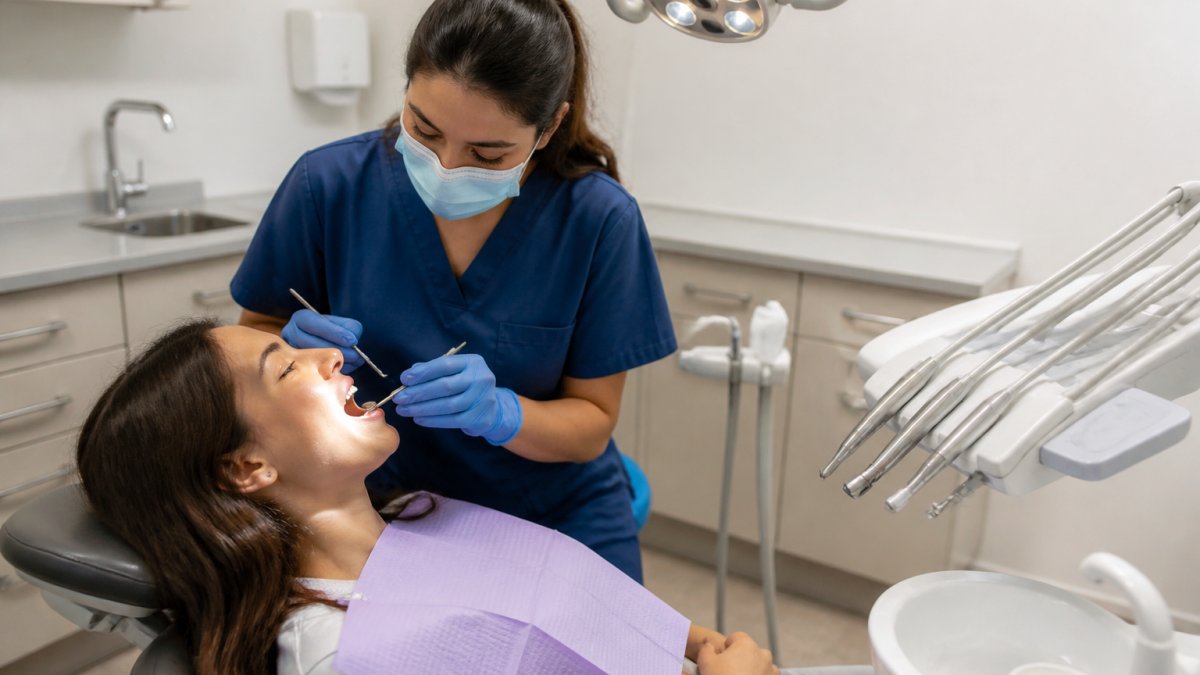
Clinical duties are the hands-on part:
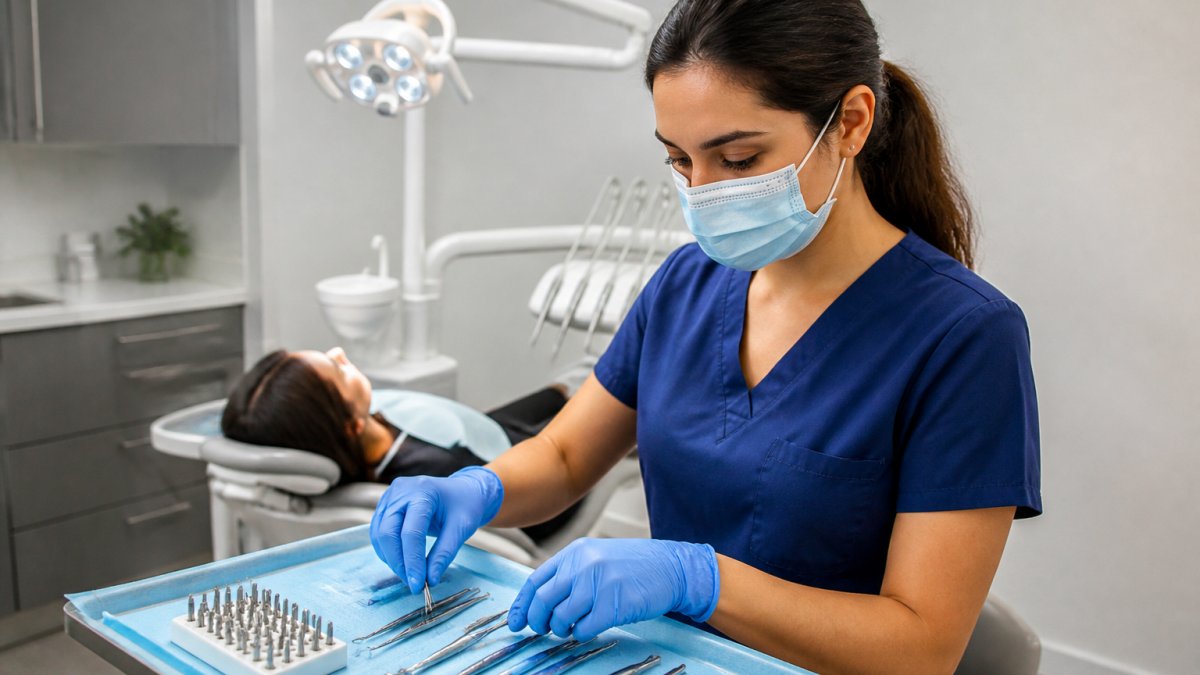
Preparing trays and sterilizing instruments
Passing instruments to the dentist during procedures
Using suction to keep the patient's mouth clear
Administrative duties keep the office running:
Scheduling patient appointments
Confirming insurance details
Updating patient records
Infection control and sterilization are non-negotiable: strict daily protocols protect patients and keep the practice compliant.
The mix depends on the office: a small practice may have you doing everything, while a large one may keep you mostly chairside.
How to Verify Program Quality and Avoid Misleading Claims
Not every dental assisting program delivers what it promises. Some collect tuition, hand out a certificate, and leave you to find your own job. Ask these questions of every program you consider:
Where is the externship? If they cannot name real dental offices, walk away.
Who teaches the clinical hours? Practicing dental professionals, or someone reading from a textbook?
What is the total cost? Tuition, books, materials, scrubs, and exam fees.
A program that dodges these questions is hiding something; a strong one answers without hesitation.
The tuition gap between routes is real. Traditional college dental assisting programs can run well into five figures, while accelerated hands-on programs cost a fraction of that. guidance on choosing accredited career and technical education programs explains what to look for in a quality vocational program.
Watch Out Watch for programs that charge college-level tuition but provide no externship placement and no job support. You pay for the credential and get handed a list of offices to call on your own. That is not a career pathway. That is a certificate.
Conclusion: Your Fastest Path to a Dental Assisting Career
The fastest route into dental assisting is not the cheapest or shortest on paper. It is the one that puts you in a real dental office, builds hands-on skills, and connects you to practices that are actively hiring.
That is exactly what The Apprentice Academy was built to do.
You do not need a four-year degree or a mountain of student debt to start a stable healthcare career. You need the right program and 12 focused weeks.
Frequently Asked Questions
What is the fastest you can become a dental assistant?
Accelerated programs can get you job-ready in as little as 12 weeks, compared to 9-month college programs. These fast-track options combine hands-on clinical training in real dental offices with focused coursework, so you build practical skills quickly. After completing a program, you may still need to pass a state exam or earn a credential depending on where you work. The fastest path is a program that includes externship placement and job placement support.
Do you need formal training to become a dental assistant?
Requirements vary by state. Some states allow entry-level dental assistants to learn entirely on the job, while others require graduation from an accredited program before you can perform expanded duties like radiography or coronal polishing. Even where on-the-job training is allowed, formal programs give you hands-on experience with instruments, infection control, and patient care that employers look for. A structured program also prepares you for certification exams and connects you with hiring dental offices.
Can you train to become a dental assistant while working?
Yes. Many accelerated programs offer flexible scheduling, including evening and weekend options, so you can keep a full-time job during training. The key is choosing a program with hands-on clinical hours that fit around your existing commitments. Programs that partner with local dental offices for externships can also help you complete required clinical hours without finding your own site. Ask about part-time tracks and schedule flexibility before enrolling.
What credentials do dental assistants need?
Credential requirements depend on your state. Some states require dental assistants to hold a Registered Dental Assistant (RDA) credential or complete a state-approved exam before performing expanded functions. Others require certification in specific areas like radiography or infection control. Most programs prepare you for the RDA exam or equivalent state credential. Always check your state dental board's requirements, since scope of practice and permitted duties vary significantly from state to state.
Apply Now
Comments